SAFETY DATA SHEET
In Accordance with OSHA HCS (29 CFR 1910.1200) and GHS Rev. 7
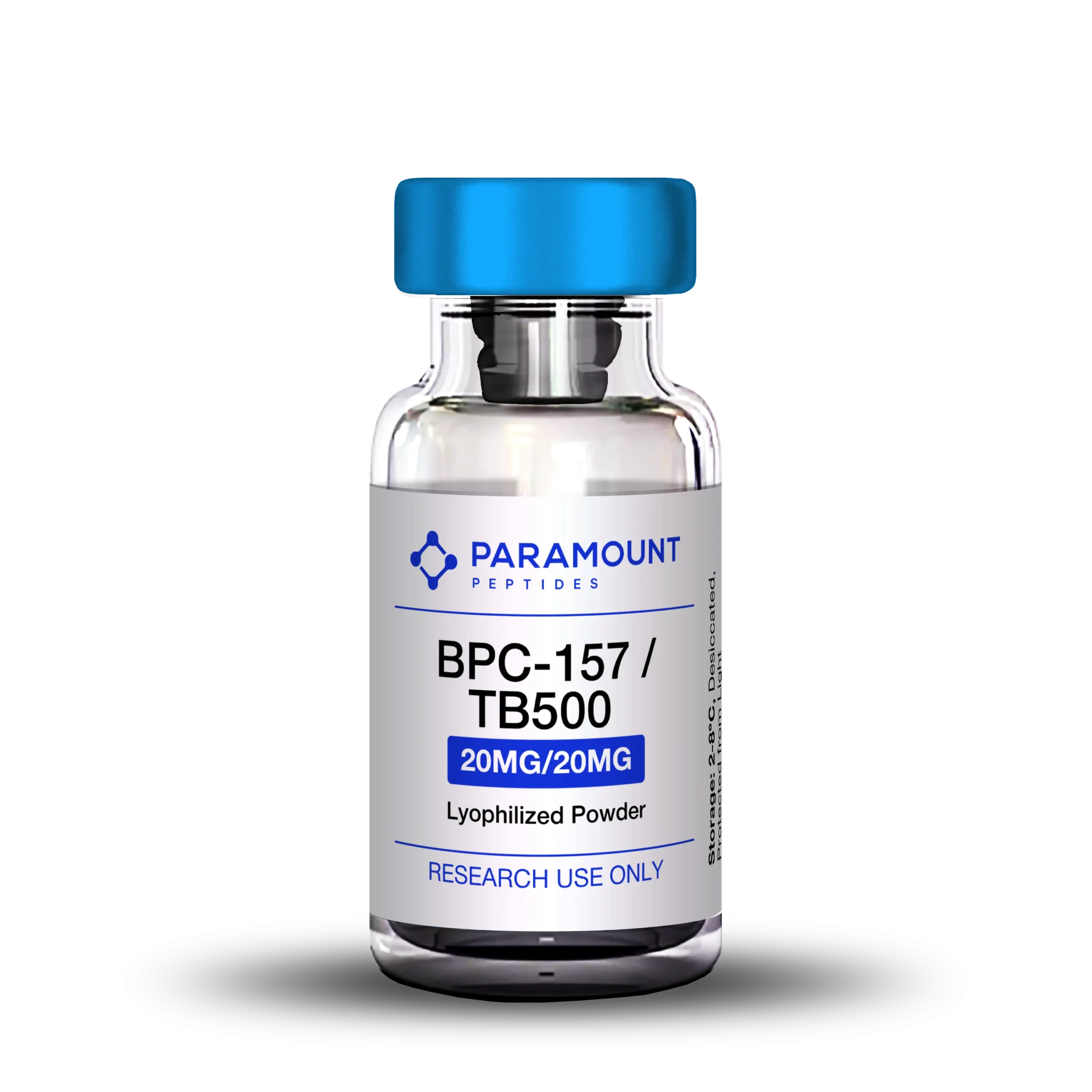
Wolverine Blend – Short Chain (BPC-157 / TB-500 Frag 17–23)
SECTION 1: IDENTIFICATION
| Product Name | Wolverine Blend – Short Chain (BPC-157 / TB-500 Frag 17–23) |
| Chemical Name | Research blend: BPC-157 (Pentadecapeptide) + TB-500 short chain (Thymosin β4 fragment 17–23) |
| Synonyms | Wolverine 20/20; Wolverine Short Chain; BPC-157/TB-500 Frag 17–23 blend; Ac-LKKTETQ |
| CAS Number | BPC-157: 137525-51-0; TB-500 Frag 17–23: 885340-08-9 |
| Molecular Formula | BPC-157: C62H98N16O22; TB-500 Frag 17–23 (Ac-LKKTETQ-OH): C38H68N10O14 |
| Molecular Weight | BPC-157 ~1,419.5; TB-500 Frag 17–23 ~889.0 g/mol |
| Product Code / Batch Number | See Certificate of Analysis for batch-specific information |
| Recommended Use | Research Use Only (RUO). Not for human or veterinary use. |
| Manufacturer / Supplier | Paramount |
| Emergency Contact | (888) 890-8143 |
| Date of Issue | October 2026 |
SECTION 2: HAZARDS IDENTIFICATION
GHS Classification: Not classified according to GHS criteria. Peptide blend for research. Standard laboratory precautions apply.
Hazard Pictograms: None (not classified)
Hazard Statements: None (not classified)
Precautionary Statements: As a matter of good laboratory practice when handling pharmacologically active peptides: P264 - Wash hands thoroughly after handling. P270 - Do not eat, drink, or smoke when using this product. P280 - Wear protective gloves, eye protection, and lab coat. P261 - Avoid breathing dust/aerosol. P271 - Use only in a well-ventilated area.
Other Hazards: Pharmacologically active peptide blend investigated for tissue repair and recovery research. No specific hazards identified at research quantities. For laboratory research only.
SECTION 3: COMPOSITION / INFORMATION ON INGREDIENTS
| Chemical Name | Research blend: BPC-157 (Pentadecapeptide) + TB-500 short chain (Thymosin β4 fragment 17–23) |
| CAS Number | BPC-157: 137525-51-0; TB-500 Frag 17–23: 885340-08-9 |
| Molecular Formula | BPC-157: C62H98N16O22; TB-500 Frag 17–23 (Ac-LKKTETQ-OH): C38H68N10O14 |
| Molecular Weight | BPC-157 ~1,419.5; TB-500 Frag 17–23 ~889.0 g/mol |
| Amino Acid Sequence | BPC-157: GEPPPGKPADDAGLV; TB-500: Ac-LKKTETQ-OH (N-acetyl, Thymosin β4 residues 17–23) |
| Description | Lyophilized two-component synthetic peptide blend for research use in tissue repair studies. |
| Number of Amino Acids | Blend (BPC-157: 15 aa; TB-500 Frag 17–23: 7 aa) |
| Purity | ≥98% by RP-HPLC per component |
| Counter Ion | Acetate (unless otherwise specified on COA) |
| Concentration | 100% neat lyophilized powder (or as specified) |
SECTION 4: FIRST-AID MEASURES
Inhalation: Move person to fresh air. If breathing is difficult, administer oxygen. If not breathing, give artificial respiration. Seek immediate medical attention.
Skin Contact: Remove contaminated clothing. Wash affected area thoroughly with soap and water for at least 15 minutes. If irritation develops or persists, seek medical attention.
Eye Contact: Immediately flush eyes with copious amounts of water for at least 15 minutes, lifting upper and lower eyelids periodically. Remove contact lenses if present and easy to do. Seek medical attention if irritation persists.
Ingestion: Rinse mouth with water. Do NOT induce vomiting. Seek medical attention immediately. If conscious, give water to drink.
Most Important Symptoms/Effects: No specific symptoms documented for this substance. Effects may include irritation of eyes, skin, and respiratory tract upon exposure to dust or aerosol.
Note to Physician: Treat symptomatically. This product is a research chemical with limited toxicological data. Consider the pharmacological activity of the compound when evaluating exposure.
SECTION 5: FIRE-FIGHTING MEASURES
Suitable Extinguishing Media: Water spray, carbon dioxide (CO2), dry chemical powder, alcohol-resistant foam.
Unsuitable Extinguishing Media: A solid water stream may be inefficient.
Specific Hazards Arising from the Chemical: Thermal decomposition may produce carbon oxides (CO, CO2), nitrogen oxides (NOx). Fine dust may form explosive mixtures with air at high concentrations.
Protective Equipment for Firefighters: Wear self-contained breathing apparatus (SCBA) and full protective gear. Use water spray to cool fire-exposed containers.
SECTION 6: ACCIDENTAL RELEASE MEASURES
Personal Precautions: Wear appropriate personal protective equipment (PPE) including gloves, safety goggles, and lab coat. Avoid dust generation. Ensure adequate ventilation. Evacuate area if large spill.
Environmental Precautions: Do not allow product to enter drains, sewers, surface water, or ground water. Contain spill to prevent environmental contamination.
Methods for Containment and Cleanup: Carefully sweep or vacuum spilled material and collect in a suitable, labeled container for disposal. Avoid generating dust. Clean contaminated surfaces with water. Dispose of waste in accordance with all applicable local, state, and federal regulations.
SECTION 7: HANDLING AND STORAGE
Handling Precautions: Handle in a well-ventilated area. Avoid inhalation of dust or aerosol. Avoid contact with skin, eyes, and clothing. Use appropriate PPE at all times. Wash hands thoroughly after handling. Do not eat, drink, or smoke in work areas.
Storage Conditions: Store lyophilized powder at -20°C or below for long-term stability. Protect from light and moisture. The peptide is hygroscopic — keep container tightly sealed. After reconstitution, store at 2–8°C and use within 7 days. For long-term storage, aliquot and store at -20°C. Avoid repeated freeze-thaw cycles. Aqueous solutions are most stable at pH 3.5–4.4.
Incompatible Materials: Strong oxidizing agents, strong acids, strong bases.
SECTION 8: EXPOSURE CONTROLS / PERSONAL PROTECTION
Occupational Exposure Limits (OELs): No established OEL, PEL, or TLV for this substance. Handle as a potentially pharmacologically active compound.
Engineering Controls: Use in a normal, well-ventilated work area. Special engineering controls are not required for the quantities typically handled in research. Avoid generating dust when handling open powder.
Respiratory Protection: Not normally required for the quantities typically handled in research. If handling open lyophilized powder in a way that could generate airborne dust, a basic dust mask is sufficient.
Hand Protection: Wear standard nitrile laboratory gloves.
Eye/Face Protection: Wear standard safety glasses.
Skin/Body Protection: Wear a lab coat or protective clothing. If splash potential exists, wear an impervious apron.
Hygiene Measures: Wash hands and face thoroughly after handling. Remove and wash contaminated clothing before reuse. Do not eat, drink, or smoke in the work area.
SECTION 9: PHYSICAL AND CHEMICAL PROPERTIES
| Appearance | White to off-white lyophilized powder |
| Odor | Odorless |
| Molecular Formula | BPC-157: C62H98N16O22; TB-500 Frag 17–23 (Ac-LKKTETQ-OH): C38H68N10O14 |
| Molecular Weight | BPC-157 ~1,419.5; TB-500 Frag 17–23 ~889.0 g/mol |
| CAS Number | BPC-157: 137525-51-0; TB-500 Frag 17–23: 885340-08-9 |
| pH | See batch COA for reconstituted solution pH |
| Melting / Decomposition Point | Decomposes before melting |
| Boiling Point | Not applicable (solid; decomposes before boiling) |
| Flash Point | Not applicable |
| Flammability | Not flammable under normal conditions |
| Vapor Pressure | Not applicable (non-volatile solid) |
| Density | Not determined |
| Solubility | Soluble in sterile water and bacteriostatic water. |
| Partition Coefficient (log P) | Not determined |
| Auto-ignition Temperature | Not determined |
| Explosion Hazard | None known |
| Vapor Density | Not applicable |
| Evaporation Rate | Not applicable |
SECTION 10: STABILITY AND REACTIVITY
Reactivity: No dangerous reactions known under normal laboratory conditions of use and storage.
Chemical Stability: Stable under recommended storage conditions. Sensitive to moisture, heat, and prolonged light exposure.
Possibility of Hazardous Reactions: No hazardous polymerization will occur.
Conditions to Avoid: Heat, humidity, prolonged light exposure, repeated freeze-thaw cycles.
Incompatible Materials: Strong oxidizing agents, strong acids, strong bases.
Hazardous Decomposition Products: Thermal decomposition may produce carbon oxides (CO, CO2), nitrogen oxides (NOx).
SECTION 11: TOXICOLOGICAL INFORMATION
Acute Toxicity: No acute toxicity data available for this specific compound. Handle as a potentially hazardous substance.
Skin Corrosion/Irritation: Not determined. No reports of skin irritation in available literature.
Serious Eye Damage/Irritation: Not determined. Avoid eye contact as a precaution.
Respiratory or Skin Sensitization: Not determined. As with all pharmacologically active peptides, respiratory sensitization cannot be ruled out with repeated exposure.
Germ Cell Mutagenicity: Not determined. No data available.
Carcinogenicity: Not listed by IARC, NTP, or OSHA as a carcinogen.
Reproductive Toxicity: Not determined. No data available.
STOT - Single Exposure: Not determined.
STOT - Repeated Exposure: Not determined.
Aspiration Hazard: Not applicable (solid).
Pharmacological Note: BPC-157 is a gastric pentadecapeptide with reported cytoprotective and angio-protective properties in preclinical models. TB-500 Frag 17–23 (Ac-LKKTETQ) is the actin-binding region of thymosin β4 and is studied for cell migration and tissue repair. Handle as a pharmacologically active compound. Avoid inhalation, skin contact, and ingestion.
SECTION 12: ECOLOGICAL INFORMATION
Persistence and Degradability: Peptides are generally expected to be readily biodegradable through proteolytic and hydrolytic pathways in the environment.
Bioaccumulative Potential: Not expected to bioaccumulate due to peptide nature and susceptibility to enzymatic degradation.
Mobility in Soil: Not determined. Expected to have moderate to high mobility in soil due to water solubility.
Other Adverse Effects: No known adverse ecological effects. However, do not release into the environment.
SECTION 13: DISPOSAL CONSIDERATIONS
Waste Disposal: Dispose of contents and container in accordance with all applicable local, state, and federal regulations. This material may be considered a hazardous waste. Consult applicable regulations before disposal.
Recommendation: Incineration in a licensed hazardous waste facility is the recommended disposal method. Do not dispose of via municipal waste or drain systems. Unused product should not be released into the environment.
SECTION 14: TRANSPORT INFORMATION
| DOT (US Department of Transportation) | Not regulated. Not classified as dangerous goods. |
| IATA (International Air Transport) | Not regulated. Not classified as dangerous goods. |
| IMDG (International Maritime) | Not regulated. Not classified as dangerous goods. |
| ADR/RID (European Road/Rail) | Not regulated. Not classified as dangerous goods. |
Special Precautions for Transport: Ship under cold chain conditions (with dry ice or cold packs) to maintain product integrity. Ensure containers are tightly sealed and properly labeled for research materials.
SECTION 15: REGULATORY INFORMATION
TSCA (Toxic Substances Control Act): Not listed on the TSCA inventory. This product is used for research purposes only.
SARA Title III - Section 355 (EHS): Substance is not listed.
SARA Title III - Section 313 (TRI): Substance is not listed.
OSHA: Not specifically classified as a hazardous chemical under OSHA's Hazard Communication Standard (29 CFR 1910.1200). Standard laboratory precautions apply for handling pharmacologically active research compounds.
OSHA-Ca / NTP / IARC: Not listed as a carcinogen by OSHA, NTP, or IARC.
Hazardous Air Pollutants (HAPs): Not listed.
California Proposition 65: This product is not known to contain any chemicals listed under California Proposition 65.
FDA Status: This product is sold as a Research Use Only (RUO) compound and is not approved by the FDA for therapeutic, diagnostic, or human use.
SECTION 16: OTHER INFORMATION
| NFPA 704 - Health | 1 |
| NFPA 704 - Flammability | 0 |
| NFPA 704 - Reactivity | 0 |
| HMIS - Health | 1 |
| HMIS - Flammability | 0 |
| HMIS - Reactivity | 0 |
Prepared By: Paramount
Date of Issue: October 2026
Version: 1.0
Document Status: Initial issue. New product: BPC-157 blended with TB-500 short chain (Thymosin β4 fragment 17–23, Ac-LKKTETQ). Not to be confused with Wolverine Blend containing full-length Thymosin β4 (long chain), which has a separate SDS.
DISCLAIMER: The information provided in this Safety Data Sheet is believed to be correct as of the date of issue. It is provided in good faith but without warranty of any kind, expressed or implied. Paramount assumes no liability for the accuracy or completeness of the data contained herein. This SDS applies only to the material as packaged. If this product is combined with other materials, deteriorates, or becomes contaminated, it may pose hazards not mentioned in this SDS. This product is for Research Use Only (RUO) and is not intended for human consumption, diagnostic use, or therapeutic application. It shall be the user's responsibility to develop proper methods of handling and personal protection based on the actual conditions of use and to comply with all applicable laws and regulations.
END OF SAFETY DATA SHEET
Wolverine Blend – BPC-157 (10mg) / TB500 (10mg)
Supplied as a lyophilized blend for laboratory research
Customer Reviews
There are no reviews yet.
Related Products

Lightning Vial
$50.00Select options This product has multiple variants. The options may be chosen on the product page